Buying clinical seating and treatment tables for a ward or outpatient unit usually takes longer than people expect. You compare drawings, read spec sheets, check budgets and wait for sign-off from clinical leads and estates teams. At some point, you have to decide whether a hospital furniture supplier for UK sites can deliver what the brochure promises. Asking the right questions early can save weeks of emails later.
This post covers the questions NHS trusts and private hospital groups tend to raise with a hospital furniture supplier for the UK market. Some are about regulation. Others cover materials, motors, delivery, and aftercare. Not every question will apply to every order, and that is fine. Pick the ones that fit your unit and your budget.
Is the Hospital Furniture Supplier a Manufacturer or a Reseller?
Start here, because the answer shapes every conversation after it. A reseller passes your questions to a factory you will probably never see. A manufacturer can answer you directly, since the frames, welding and upholstery all happen under its own roof.
Ask where each product is built and who controls each stage of production. Esthetica Medical Furniture runs its own facility in IMT Manesar, with CNC turning, laser cutting, welding and upholstery in-house. With that kind of setup, it is easier to get clear answers on frame gauge, weld finish or a custom upholstery colour.
UK Medical Device Rules to Raise With Your Supplier
Here is why this part deserves time. Many powered chairs and examination tables are classed as medical devices, and the paperwork has to match the product. All medical devices need to be registered with the MHRA before they are placed on the Great Britain market.
CE marking still counts for now. CE-marked medical devices continue to be accepted on the Great Britain market, with deadlines depending on the device type and the legislation it complies with. The latest deadline is 30 June 2030. The MHRA has also consulted on going further. Around 90% of medical devices currently used in Great Britain are CE marked, and the proposals for indefinite recognition would ensure consistent long-term supply.
So ask your supplier these questions:
- Which device class does each product fall under?
- Is it CE- or UKCA-marked, and can you see the declaration of conformity?
- Who acts as the UK Responsible Person for registration?
These rules change over time, so check the current MHRA guidance before you sign a purchase order.
How Hospital Furniture Supports Infection Prevention
NHS estates guidance treats cleanability as a design question, not something to sort out afterwards. HBN 00-09 notes that a building’s design can help infection prevention and control by providing an environment that is easy to clean and maintain. Chairs and tables sit inside that environment, so the same thinking applies to them.
Ask the supplier:
- Does the upholstery hold up against the disinfectants your IPC team uses?
- Are seams, joints and gaps easy to wipe down between patients?
- Is the frame powder-coated, and how does the finish look after months of cleaning?
Bring your infection prevention lead into these talks early. Send the supplier your list of cleaning products and ask for test data against those specific products, not a general claim.
Clinical Features to Check for Each Department
A dialysis bay, a chemotherapy suite and a physiotherapy room each need different things from a chair or table, so check the features against how each unit works.
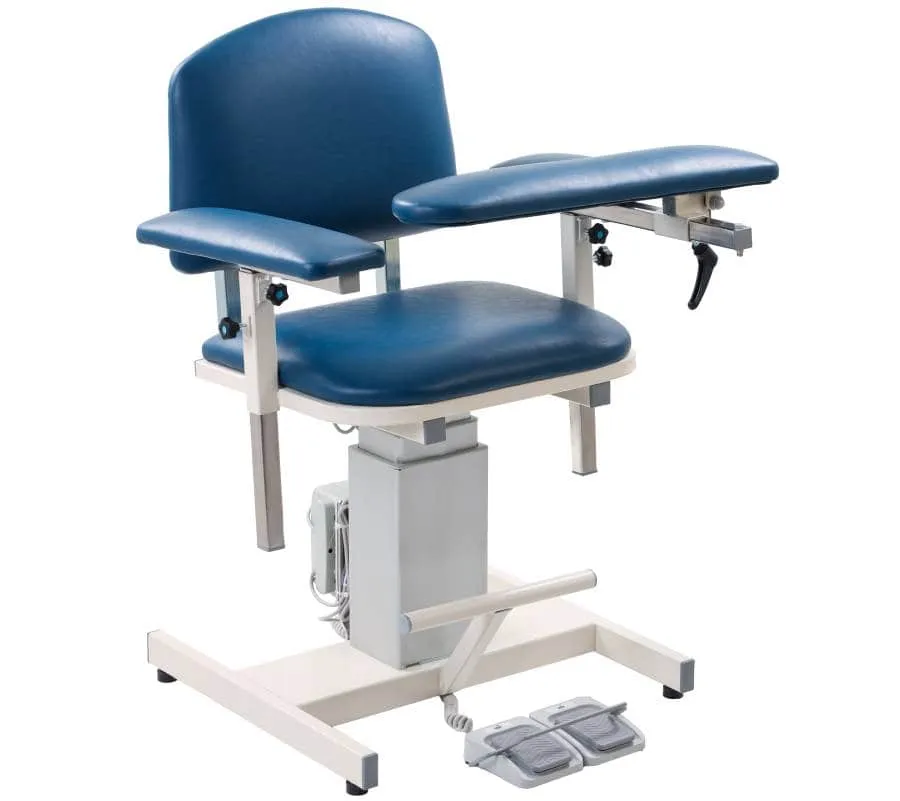
- Dialysis units: Look for electronic height, backrest and leg rest adjustment, Trendelenburg positioning and a quick-release backrest for CPR. Ask staff how quickly they would want to lower a patient who feels faint, then test the chair against that.
- Oncology and infusion centres: Long sessions call for comfort and easy repositioning. Esthetica’s Chemotherapy Chair uses five motors and programmable memory functions, so nurses can return to set positions without adjusting each section by hand. A low access height also helps patients get in and out.
- Physiotherapy and examination rooms: Hi-lo tables with multi-section tops suit a range of treatments. A walk-free switch lets the therapist adjust height while staying next to the patient.
- Gynaecology clinics: Ask about electronic pelvis inclination and foot switch control, which keep the clinician’s hands free.
Ask for a demonstration video or a detailed spec sheet for each model. A photo alone will not show how smoothly the motors run.
See Also: Environmental Monitoring Technologies Explained
Delivery, Lead Times and Spares for UK Hospitals
Buying from an overseas manufacturer raises fair practical questions. Esthetica’s UK page states that sea freight is delivered to Felixstowe and Southampton, which gives you a clear starting point for planning.
From there, ask:
- What is the lead time from order confirmation to arrival at port?
- Who handles customs clearance and import duty?
- How is each unit packed to protect motors and upholstery in transit?
- How are spare handsets, motors or cushions supplied, and how long do they take?
Next Steps Before You Request a Quote
A clear brief gets you a clearer quote. Before contacting any supplier, pull together the following:
- The departments involved and the number of chairs, tables or stools each one needs
- Your IPC team’s approved cleaning products
- Any regulatory documents your procurement team requires
- Room sizes and door widths for each delivery point
With these details in hand, you can compare suppliers on the same terms and spend less time chasing missing details.